Ranthambore Safari Zones Explained: Which Zone Should You Pick in 2026?
Introduction
Ranthambore National Park is divided into 10 safari zones, and this is the single most confusing part of planning a trip here. Every zone offers a different experience — some are famous for frequent tiger sightings, some for their forts and lakes, and some for their raw, less-crowded wilderness. Picking the right zone can be the difference between spotting a tiger in the first ten minutes or coming back with only birdsong for company.
In this guide, we break down all 10 zones — Zone 1 to Zone 10 — so you know exactly what to expect before you book.
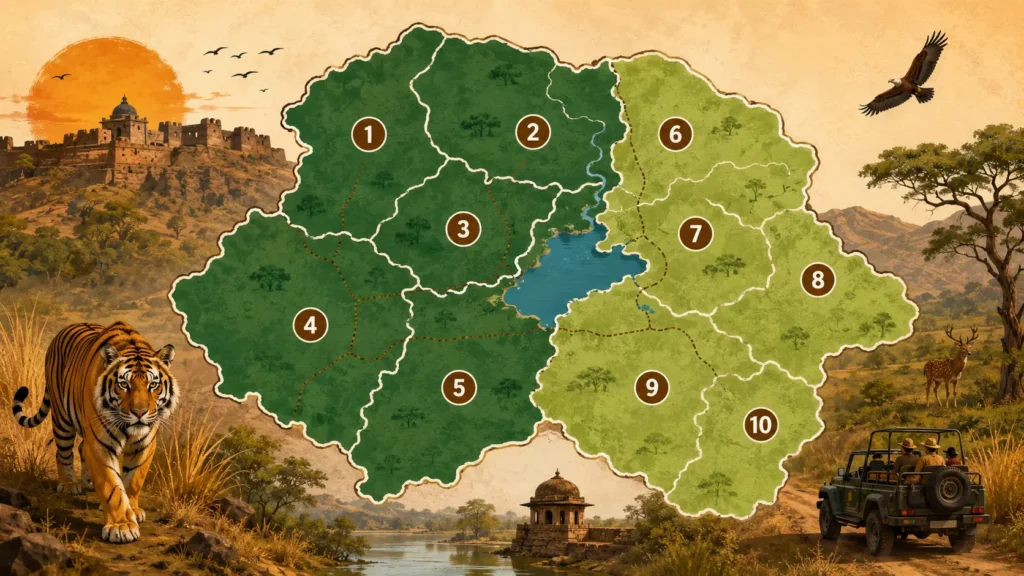
Core Zones vs Buffer Zones: What's the Difference?
Ranthambore’s 1,334 sq. km area is split into two broad categories:
- Core Zones (1–5): These sit at the heart of the reserve and have historically recorded the highest tiger density. Landscapes here include Padam Talao, Rajbagh Lake, and views of Ranthambore Fort.
- Buffer Zones (6–10): These were opened more recently to ease pressure on the core zones. They’re less crowded, often cheaper, and increasingly known for consistent sightings as more tigers establish territories here.
Neither category guarantees a sighting — tigers move freely across zones — but each has a different “personality” worth knowing before you book.
Zone-by-Zone Breakdown
Zone 1
Closest to Ranthambore Fort, with rugged terrain and dry deciduous forest. Historically one of the harder zones for sightings but rewarding for landscape and fort views.
Zone 2
Home to Padam Talao and Jogi Mahal — one of the most photographed corners of the park. Good mix of water bodies and open grassland that draws wildlife.
Zone 3
Considered one of the strongest zones for tiger sightings, largely because of its lake systems and dense prey base.
Zone 4
Similar advantages to Zone 3, with Rajbagh Lake as its centerpiece. A favourite among photographers for tiger-and-lake shots.
Zone 5
Slightly drier terrain than 3 and 4, but still part of the high-density core cluster.
Zone 6
The first of the buffer zones, offering wider, more open landscapes and fewer vehicles per sighting.
Zone 7
Known for varied terrain — a mix of hills and grassland — and a good option when core zone permits are sold out.
Zone 8
Quieter and less touristy, better suited for travellers who want a calmer safari experience alongside decent sighting odds.
Zone 9
One of the newer buffer zones, still building its reputation, but increasingly recommended by local guides for consistent activity.
Zone 10
The most remote of the ten, ideal for serious wildlife photographers looking for solitude over guaranteed sightings.
Which Zone Should You Pick?
- First-time visitor wanting the classic Ranthambore experience: Zone 3 or 4
- Photographer chasing the fort-and-lake shot: Zone 2
- Budget-conscious or last-minute booking: Zone 6 or 7 (buffer zones are usually easier to get permits for)
- Want a quieter, less crowded safari: Zone 8 or 10
How Zone Allotment Works
Ranthambore Safari permits are zone-specific and allotted through the official online booking system, and zones are often assigned randomly within your chosen category (core or buffer) unless you book well in advance for a specific zone. Booking 60–90 days ahead gives you a much better chance of securing your preferred zone.
FAQs
Q: Can I choose my exact zone when booking? You can request a preferred zone, but confirmation depends on availability at the time of booking.
Q: Are buffer zones worth visiting? Yes — buffer zones have seen growing tiger activity in recent years and are often less crowded than core zones.
Q: Which zone has the highest tiger sighting rate? Zones 3 and 4 have historically reported the most consistent sightings, though this shifts as tiger territories change.
Conclusion
There’s no single “best” zone in Ranthambore — only the best zone for what you’re looking for. If you want help picking a zone and planning your safari dates, Exploravelia Wild can guide you through the booking process and match you with the right zone for your trip.