Kuno Goat Meat Scam: How a 30 kg Goat Became 90 kg in a Crores-Worth Cheetah Feeding Fraud
Kuno National Park in Madhya Pradesh, globally known as the home of India’s ambitious Project Cheetah, is now facing serious corruption allegations — this time not about the cheetahs themselves, but about what they’re being fed.
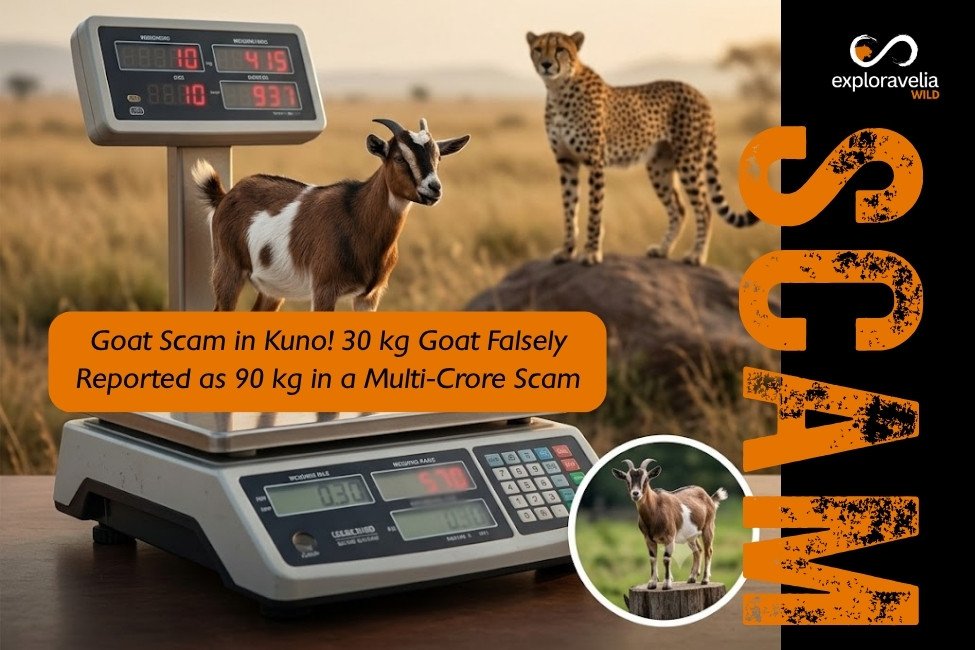
A formal complaint filed with the Gwalior Economic Offences Wing (EOW) alleges that goats weighing around 30 kg were officially recorded and billed as 90 kg, allowing suppliers to pocket crores of rupees in inflated payments meant for cheetah meat procurement.
Here’s a complete breakdown of the allegations, the numbers involved, and what happens next.
Where It All Began: The 2022 Meat Procurement
When cheetahs were first relocated to Kuno from Namibia in September 2022, the park needed a steady supply of goat and buffalo meat to feed them. According to the complaint, this procurement was done without a proper tender process.
The allegation is that the supplier was paid at a rate of roughly ₹700 per kilogram — a figure the complainant claims is significantly higher than standard market rates for goat meat in the region.
The Core Allegation: Inflated Weights
The most serious charge in the complaint is straightforward but damaging: every goat’s recorded weight was allegedly inflated by 20 to 30 kg above its actual weight. Payments were then calculated and released based on these inflated figures rather than the real weight of the animals.
This is where the viral “30 kg goat shown as 90 kg” claim comes from — a stark illustration of how much padding was allegedly built into the billing.
The complainant, Sheopur resident Mohammad Cheeni Quraishi, has stated that this wasn’t a one-off error but a deliberate, repeated pattern that let the supplier collect inflated payments over an extended period.
Not Just 2022: Tender Irregularities in Later Years
The complaint doesn’t stop at the initial 2022 purchase. It also raises questions about tenders awarded in 2024-25, 2025-26, and 2026-27, alleging that:
- Lower-rate bids were cancelled without valid justification
- Higher-rate suppliers were favoured in the awarding process
- The online tendering process itself may have been manipulated, with questions raised about the role of a computer operator involved in handling it
The Bigger Financial Picture
To understand the scale of what’s being alleged, some context helps:
- Madhya Pradesh’s state assembly was recently informed that in 2024-25 alone, the park spent ₹1.27 crore on goat meat to feed 32 cheetahs
- There is reportedly no separate dedicated budget line for goat procurement — the expense is drawn from other budget heads
- The overall cheetah rehabilitation project has already cost the state over ₹100 crore
Against this backdrop, even a modest per-kilogram overbilling scheme could translate into a substantial diversion of public funds over multiple years.
Who's Being Accused
The complaint names both Kuno park officials and the current meat supplier, alleging collusion between the two to keep the alleged fraud running. The complainant has demanded:
- A criminal case against those found responsible
- A transparent, tender-based supply system going forward
What Happens Next
The Gwalior EOW is now expected to examine procurement documents, payment records, and weighing logs to verify the claims. Investigators will also look into whether tender rules were bypassed in the later procurement cycles flagged in the complaint.
It’s important to note: as of now, these are allegations under investigation, not a proven case of fraud. No FIR or arrest has been confirmed at this stage.
Why This Story Matters
Project Cheetah is one of Prime Minister Narendra Modi’s flagship wildlife conservation initiatives, and Kuno has drawn international attention as the reintroduction site for cheetahs in India after their local extinction decades ago. Allegations of financial irregularity — however small the individual scam sounds (“a goat’s weight”) — strike at the credibility of a project that has already consumed over ₹100 crore in public money.
For a region like Sawai Madhopur and Ranthambore, where wildlife tourism and conservation credibility directly affect the local economy, stories like this are a reminder that transparency in wildlife project spending isn’t just a bureaucratic detail — it’s central to public trust in conservation itself.
(This article is based on a complaint filed with the Gwalior EOW and subsequent media reporting. The allegations are currently under investigation and have not been proven in court.)