Sariska Safari Guide 2026: Zones, Timings, Cost, Booking & Best Time to Visit
A Sariska safari is the closest real tiger safari to Delhi and Jaipur — and one of the most remarkable comeback stories in world conservation. Twenty years ago, Sariska Tiger Reserve had zero tigers. Today it holds 56. If you are planning a Sariska safari in 2026, this guide covers everything: safari zones, timings, jeep and canter cost, online booking, the best time to visit, how to reach, and the tips that actually improve your chances of a sighting.
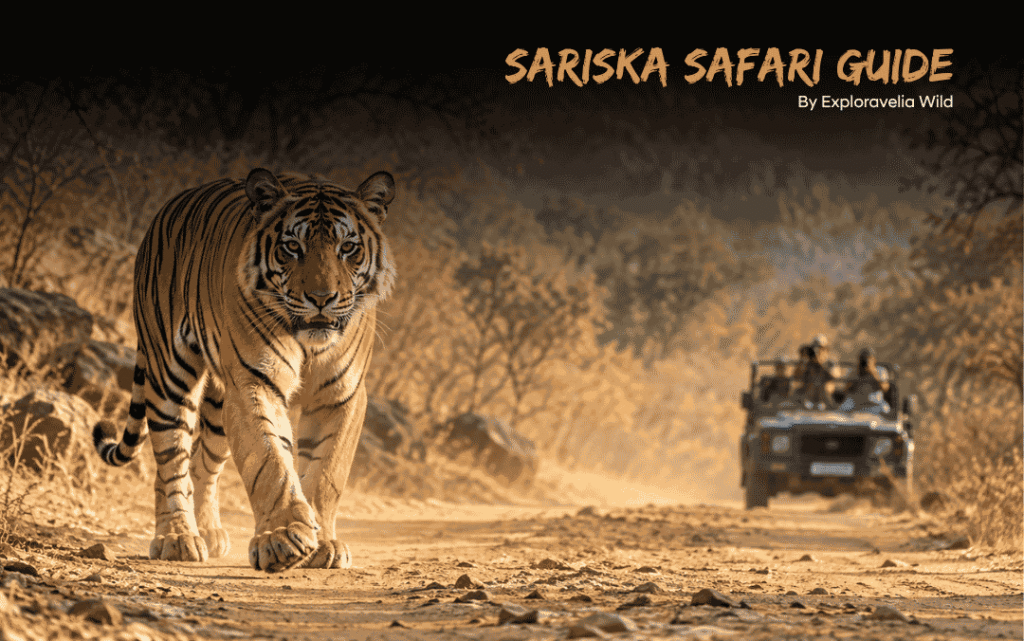
Sariska Tiger Reserve at a Glance
Detail | Information |
|---|---|
Location | Alwar district, Rajasthan, in the Aravalli Hills |
Distance | About 110 km from Jaipur, about 180–200 km from Delhi |
Wildlife sanctuary | 1955 |
Tiger reserve (Project Tiger) | 1978 |
Tiger population (July 2026) | 56, up from 50 in 2025 |
Safari gates | Sariska Gate (Zones 1–3) and Tehla Gate (Zone 4) |
Safari type | Gypsy (6 seats) and Canter (20 seats) |
Season | Core zones open October to June; reopened 1 October 2026 |
The Sariska Tiger Story: From Zero to 56
Sariska’s history is the reason many wildlife lovers choose a Sariska safari over bigger parks. In 2003 the reserve still had about 16 tigers. By 2004, forest staff could find no tigers and no signs of them — no pugmarks, no scrapes, no scat. In January 2005, it was officially accepted that Sariska had lost every tiger to poaching. A later CBI probe arrested a gang that admitted to killing at least 10 tigers here between 2002 and 2004.
The rescue plan was bold. On 28 June 2008, a male tiger, ST-1, was flown from Ranthambore to Sariska by helicopter — the first aerial tiger translocation in the world. Tigress ST-2 followed in July 2008, and another tigress arrived in February 2009. Several of these founders came from the famous Ranthambore bloodlines linked to Tigress Machli.
The road was not smooth. ST-1 died of poisoning in November 2010, and for years breeding was slow. But the population slowly recovered: 11 tigers by 2014, 20 by 2020, 30 in 2023, and 56 in 2026. In the 2026 count, Sariska recorded more cub births (28) than any other reserve in Rajasthan. Sariska is now studied as the world’s first successful scientific tiger reintroduction.
Sariska Safari Zones and Entry Gates
The Sariska safari runs through two entry gates and four routes. Unlike Ranthambore, zones in Sariska are allotted by the forest department, so you cannot always pick one.
Gate | Zones | What to Expect |
|---|---|---|
Sariska Gate (Sadar Gate) | Zone 1, Zone 2, Zone 3 | Main gate on the Alwar–Jaipur road. Most tiger sightings, most resorts nearby. Best choice for most visitors. |
Tehla Gate | Zone 4 | About 80 km from Sariska Gate. Quieter, fewer vehicles, lower sighting rate. |
Bala Quila (buffer) | Buffer safari | Near Alwar city. Good when core zones are full or closed in monsoon. |
Zone 1 is the most visited Sariska safari zone and offers both Gypsy and Canter. Zone 2 is less crowded and often has good sightings. Zone 3 is as popular as Zone 1. Zone 4 suits repeat visitors who want solitude over guaranteed sightings.
Sariska Safari Timings 2026
Safaris run twice a day. Exact timings shift slightly with sunrise and sunset, so confirm on your booking slip.
Season | Morning Safari | Evening Safari |
|---|---|---|
Winter (Oct–Mar) | approx. 6:30 AM – 10:30 AM | approx. 2:00 PM – 6:00 PM |
Summer (Apr–Jun) | approx. 6:00 AM – 10:00 AM | approx. 2:30 PM – 6:30 PM |
The core area closes during monsoon (roughly July to September) and reopened for the 2026–27 season on 1 October 2026.
Sariska Jeep Safari Cost and Canter Safari Fees
Sariska safari cost depends on vehicle type and nationality. The Rajasthan Forest Department raises fees by about 10% every year; the 2026 increase took effect in Sariska from 2 April 2026.
Safari Type | Indian (approx.) | Foreigner (approx.) |
|---|---|---|
Gypsy – per seat (shared, 6 seats) | ₹1,200 | ₹1,900 |
Gypsy – full vehicle | ₹6,500 | ₹12,000 |
Canter – per seat (20 seats) | ₹750 | ₹1,500 |
Prices are indicative for 2026 and include entry, vehicle and guide charges in most packages. Always check the latest fee on the official portal or with your booking partner before paying.
Gypsy or Canter? Choose a Gypsy for photography and better positioning at a sighting. Choose a Canter if you are a large group or travelling on a budget. Our Gypsy vs Canter guide explains the difference in detail.
How to Book a Sariska Safari Online
Only 20 Gypsies and 20 Canters enter per shift, so weekend and holiday slots sell out fast. About 75% of permits are sold online in advance; about 25% are released as current booking at the gate.
- Decide your dates, shift (morning or evening) and vehicle (Gypsy or Canter).
- Book on the Rajasthan Forest Department’s online booking portal, or through a trusted safari partner who handles permits and pickup.
- Enter each traveller’s name and ID exactly as on the original ID card — one seat per named person.
- Carry the same original ID to the gate; it is checked before boarding.
- Reach the gate at least 30 minutes early for vehicle allotment.
Bookings are generally non-refundable and non-transferable. Want it sorted without the hassle? Book your Sariska safari with Exploravelia Wild on WhatsApp.
Best Time to Visit Sariska Tiger Reserve
The best time to visit Sariska depends on what you want from your safari.
- October to February (cool season): Pleasant weather, green forest after the monsoon, great for families and birding. Mornings can be cold, so carry a jacket.
- March to June (peak sighting season): Hot and dry. Water sources shrink, so tigers visit waterholes more often — the best months for tiger sightings.
- July to September (monsoon): Core zones closed. Buffer safaris may operate, and the forest is lush with peacocks dancing.
Tip: Avoid Tuesdays and Saturdays if you can. Private vehicles are allowed up to the Pandupole Hanuman Temple on these days, so the main route gets busy.
Wildlife You Can See on a Sariska Safari
The Royal Bengal tiger is the star, but Sariska’s dry Aravalli forest supports much more.
- Big cats and predators: tiger, leopard, striped hyena, jungle cat, caracal, golden jackal
- Herbivores: sambar, chital (spotted deer), nilgai, wild boar, four-horned antelope
- Primates: rhesus macaque and Hanuman langur
- Birds: over 200 species, including Indian peafowl, grey francolin, crested serpent eagle and Indian vulture
How to Reach Sariska Tiger Reserve
- By air: Jaipur International Airport is about 110 km away (around 2.5 hours by road). Delhi’s IGI Airport is about 180–200 km away.
- By train: Alwar Junction is the nearest railway station, about 35 km from Sariska Gate, with good connections to Delhi and Jaipur.
- By road: Sariska Gate sits on the Alwar–Jaipur highway. From Delhi, the drive takes about 4 hours, which makes a Sariska safari the easiest weekend tiger trip from the capital.
Places to Visit Near Sariska
- Kankwari Fort: A 17th-century fort deep inside the reserve, often seen on safari.
- Pandupole Hanuman Temple: A temple linked to the Pandavas, inside the forest.
- Neelkanth Temples: Ruins of ancient temples on a plateau near Tehla.
- Bhangarh Fort: India’s most talked-about “haunted” fort, an easy add-on drive.
- Bala Quila and Siliserh Lake: Alwar’s hill fort and a scenic lake with a heritage palace.
Sariska vs Ranthambore: Which Tiger Safari Should You Choose?
Factor | Sariska | Ranthambore |
|---|---|---|
Tigers (2026) | 56 | 72 |
Distance from Delhi | About 180–200 km | About 380 km |
Crowd level | Lower | High |
Safari zones | 4 routes | 10 zones |
Best for | Weekend trips, fewer crowds, conservation story | Highest sighting chances, photography |
Short on time or starting from Delhi? Choose Sariska. Want the best odds and have 3–4 days? Read our guides on Ranthambore safari zones and the best time to visit Ranthambore, or combine both parks in one Rajasthan trip.
Sariska Safari Tips for a Better Sighting
- Book a Gypsy in the morning shift — tigers are most active in the first hours after dawn.
- Do at least two or three safaris; one drive is rarely enough in any reserve.
- Wear earthy colours (olive, khaki, brown). Avoid white and bright red.
- Stay silent at sightings and listen for alarm calls from sambar, chital and langurs.
- Carry binoculars, a zoom lens, water, a cap and sunscreen; a warm layer for winter mornings.
- Never ask the driver to go off-track or follow a tiger too closely — it is illegal and stressful for the animal.
- First safari ever? Read our safari tips for beginners.
Conclusion: Is a Sariska Safari Worth It?
Yes. A Sariska safari gives you real tiger country just a few hours from Delhi and Jaipur, smaller crowds than India’s headline parks, and a living example of how a forest can recover after losing everything. With 56 tigers and record cub births in 2026, this is one of the best seasons yet to visit.
Ready to plan your trip? Our team of naturalists and filmmakers can arrange your permits, stay and safari zone. Connect on WhatsApp for Sariska safari booking or
Call +91 76650 46365.
FAQs
1. How many tigers are there in Sariska Tiger Reserve in 2026? Sariska has 56 tigers as of July 2026, up from 50 in 2025. The reserve recorded 28 cub births in the latest count, the highest in Rajasthan.
2. What is the Sariska safari cost? A shared Gypsy seat costs about ₹1,200 per Indian visitor, a full Gypsy about ₹6,500, and a Canter seat about ₹750 (2026, approximate). Fees rise around 10% every April.
3. What are the Sariska safari timings? In winter, the morning safari runs about 6:30–10:30 AM and the evening safari about 2:00–6:00 PM. In summer, timings shift to about 6:00–10:00 AM and 2:30–6:30 PM.
4. Which is the best zone for a Sariska safari? Zones 1, 2 and 3 from Sariska Gate have the most tiger sightings. Zone 4 from Tehla Gate is quieter but has fewer sightings.
5. Is Sariska open in monsoon? The core zones close from about July to September and reopen on 1 October. Buffer safaris may run during monsoon.