Bloodline of Tigress Machli: The Legendary Dynasty of Ranthambore
Introduction
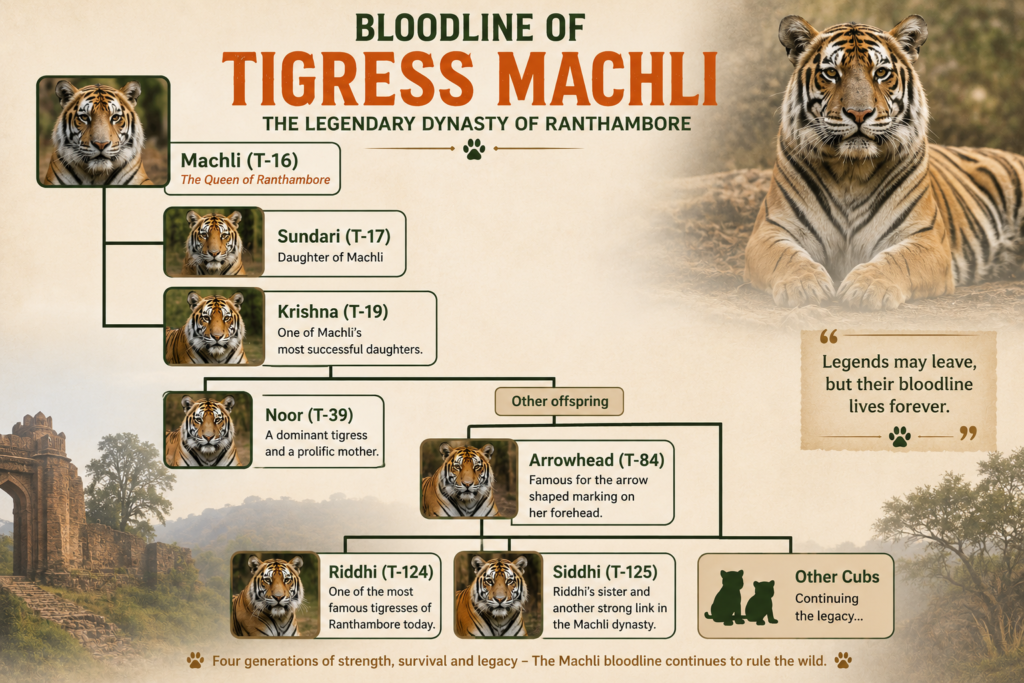
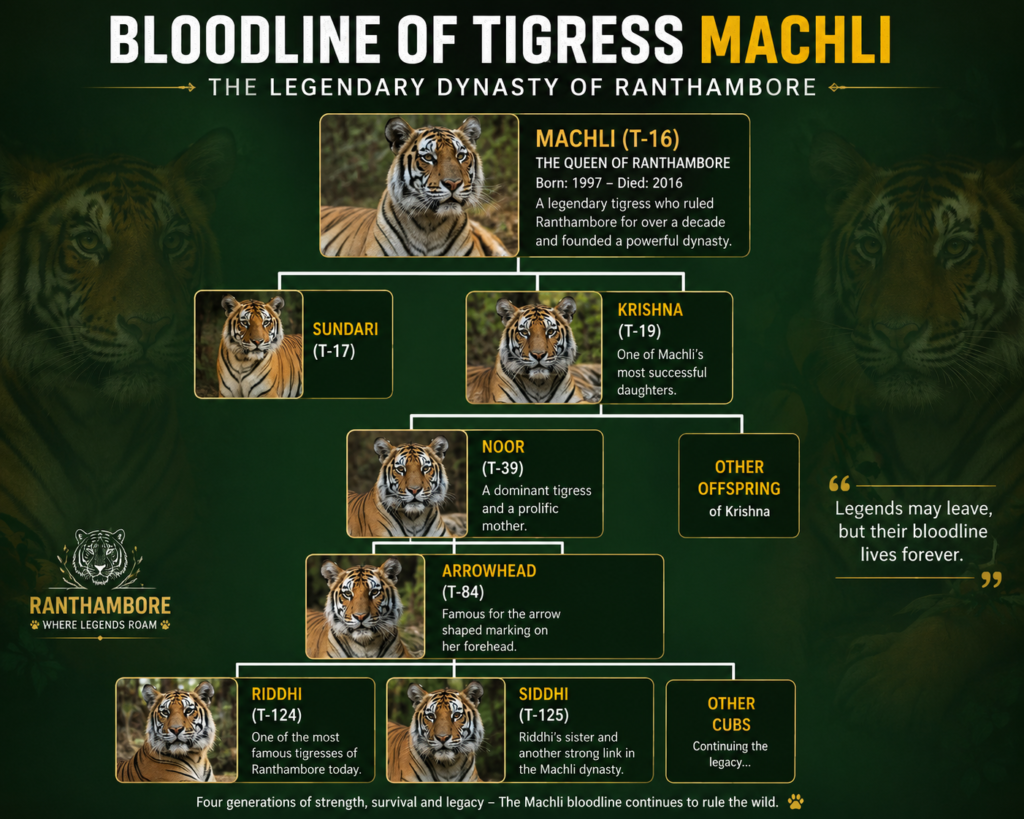
However, Machli’s greatest legacy is not just her fame. It is the powerful bloodline she left behind. Through her daughters, granddaughters, and great-granddaughters, Machli established one of the most successful tiger dynasties ever recorded in the wild. Even today, many of Ranthambore’s famous tigresses trace their ancestry directly back to her.
Who Was Machli?
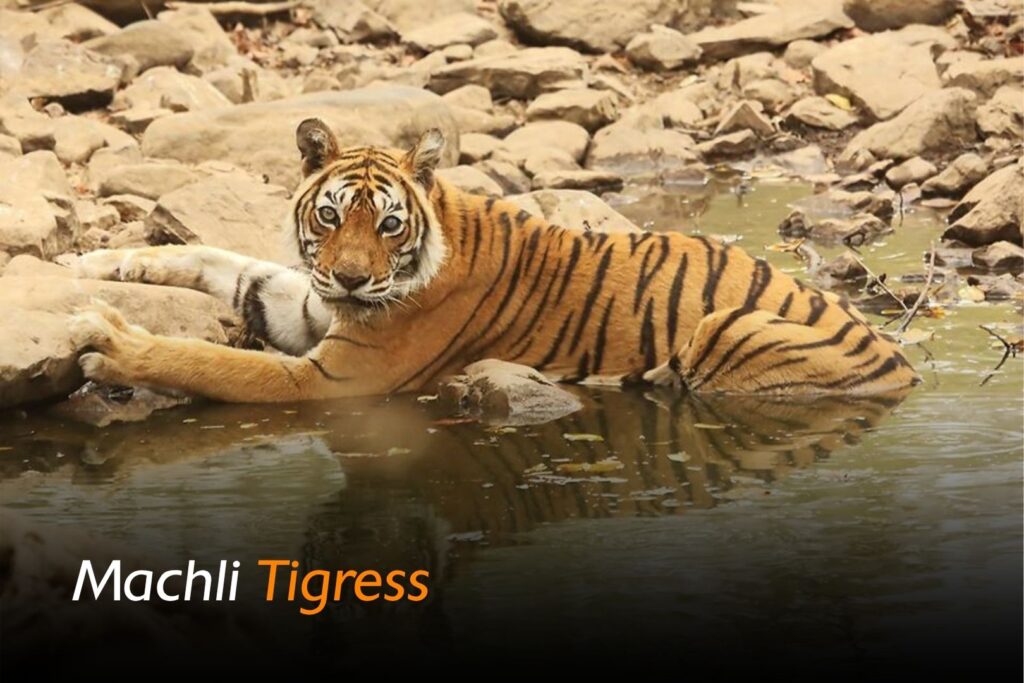
For over a decade, she ruled the lakes and forests around Zones 2, 3, and 4 of Ranthambore. Wildlife photographers, filmmakers, and tourists traveled from around the world hoping to catch a glimpse of the legendary tigress.
Machli passed away in August 2016 at the age of 19, an exceptional lifespan for a wild tiger.
The Machli Family Tree
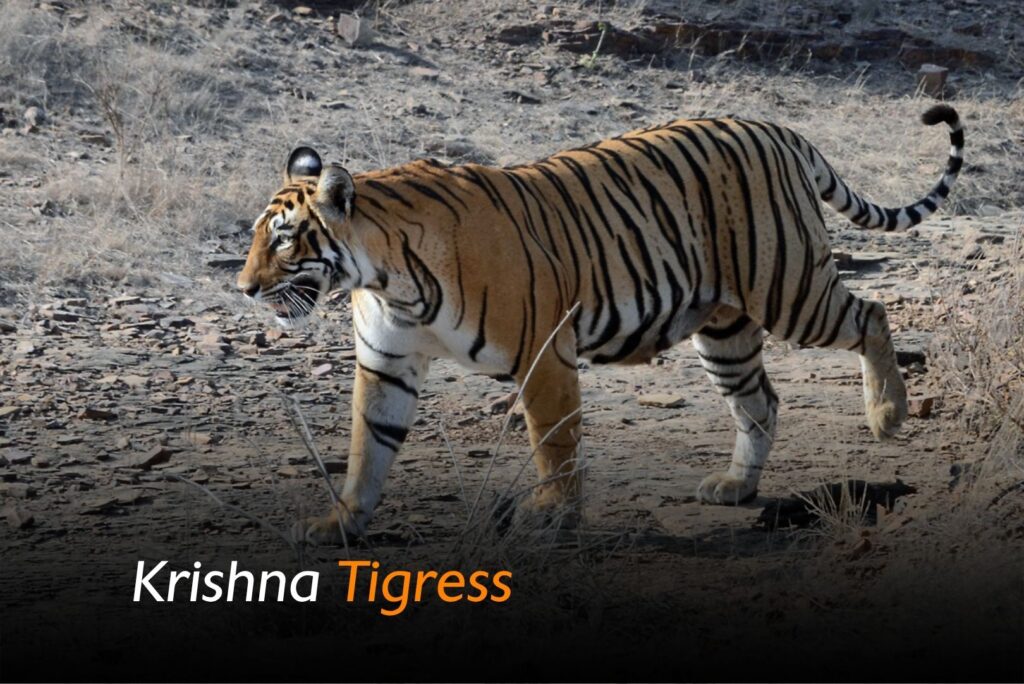
Krishna (T-19): The Famous Daughter
Krishna inherited many of her mother’s traits, including confidence, territorial dominance, and strong maternal instincts. She became one of Ranthambore’s most recognized tigresses and successfully raised several cubs.
Her contribution to the tiger population ensured that Machli’s bloodline continued to flourish across the reserve.
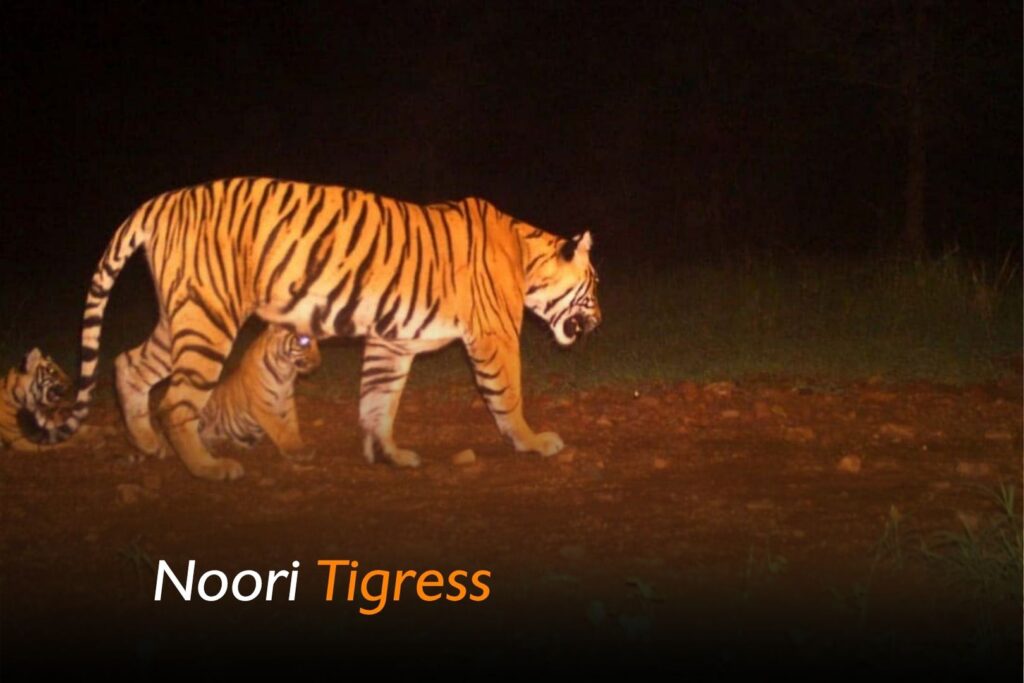
Noor (T-39): The Next Generation
Noor established her own territory and successfully raised multiple litters. Wildlife experts often credit Noor as one of the key tigresses responsible for expanding the Machli bloodline throughout Ranthambore.
Her offspring would go on to become some of the park’s most famous tigers.
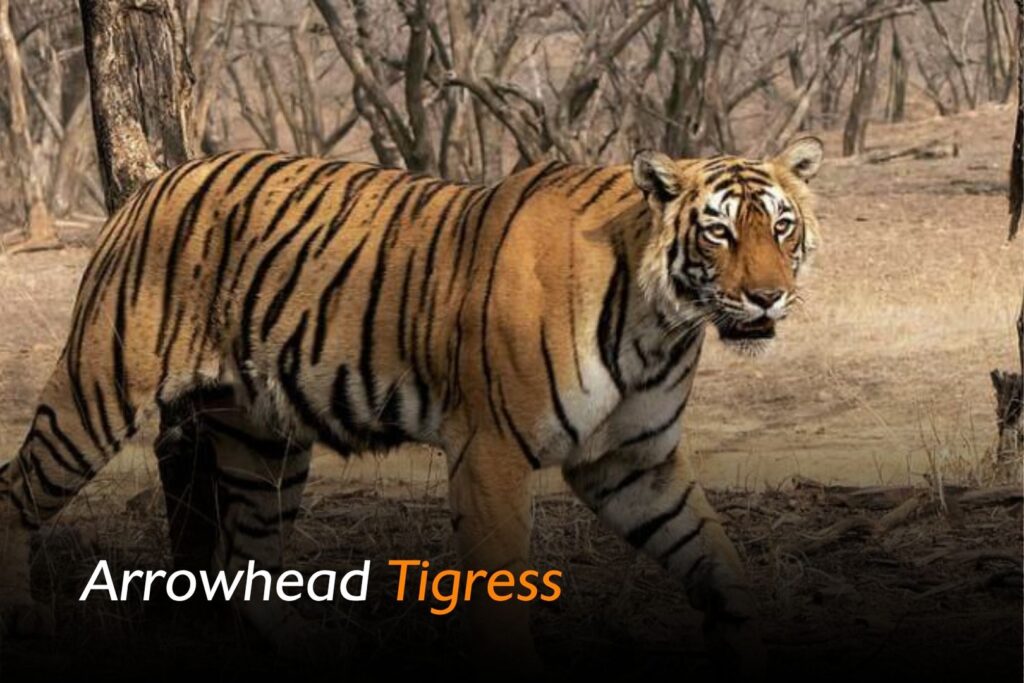
Arrowhead (T-84): The Wildlife Star
Named after the distinctive arrow-shaped marking on her forehead, Arrowhead became a favorite among wildlife photographers and safari visitors.
She inherited both the beauty and charisma of her famous ancestors. Arrowhead successfully raised multiple cubs and became one of the most important links in preserving the Machli dynasty.
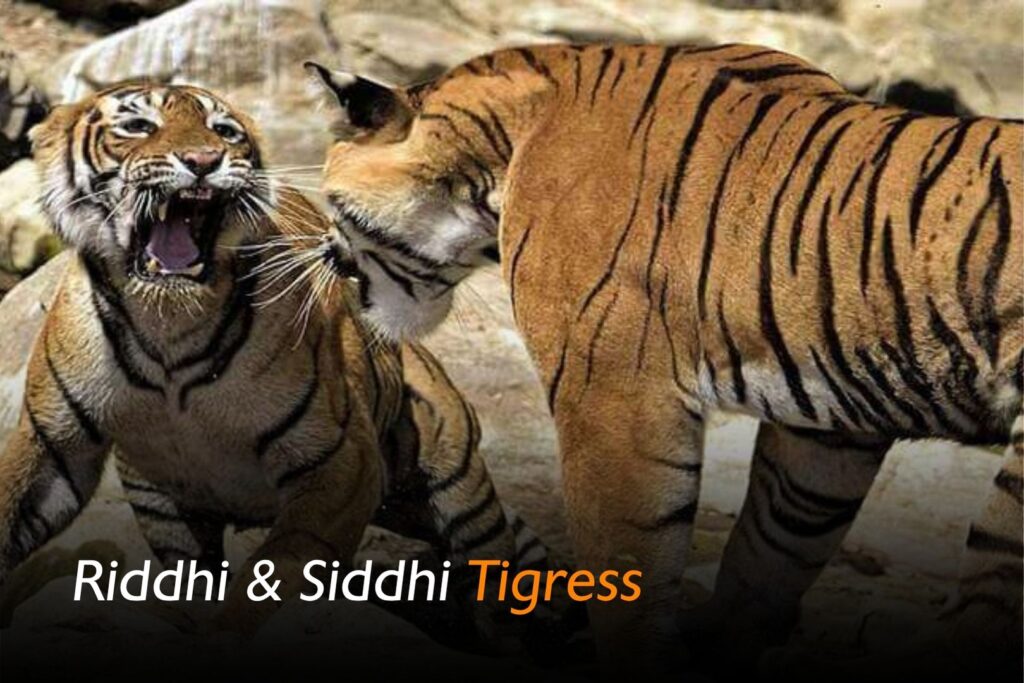
Riddhi (T-124): Carrying Forward the Legacy
Known for frequently being seen with her cubs, Riddhi has become a major attraction for wildlife enthusiasts and photographers.
As a direct descendant of Machli, she represents the continuation of one of India’s most successful tiger bloodlines.
Siddhi (T-125): The Future of the Dynasty
Alongside her sister Riddhi, Siddhi plays an important role in preserving the Machli lineage.
Siddhi’s growing presence within Ranthambore highlights how Machli’s genetic legacy continues to shape the park’s tiger population even decades after her birth.
Why Machli's Bloodline Matters
The success of Machli’s descendants demonstrates the importance of healthy breeding females in tiger conservation.
Her bloodline has:
- Increased tiger numbers in Ranthambore.
- Produced multiple successful breeding tigresses.
- Attracted wildlife tourism from around the world.
- Contributed significantly to India’s tiger conservation success story.
- Created one of the most documented tiger dynasties in the wild.
Few wild animals have left such a lasting impact on both conservation and public awareness.
Interesting Facts About Machli's Bloodline
1. Four Generations of Fame
Machli’s descendants have remained famous across four generations.
2. Most Photographed Tiger Family
The Machli family is considered among the most photographed tiger lineages in the world.
3. Global Wildlife Icon
Machli was featured in documentaries, magazines, and wildlife publications worldwide.
4. Tourism Boost
Thousands of tourists visit Ranthambore every year hoping to spot members of Machli’s family.
5. Conservation Success Story
Her lineage showcases the effectiveness of tiger conservation efforts in India.
Conclusion
The story of Machli is far more than the story of a single tiger. It is the story of a dynasty that transformed Ranthambore’s tiger population and inspired wildlife lovers across the globe.
From Machli to Krishna, Noor, Arrowhead, Riddhi, and Siddhi, each generation has carried forward the legacy of the Queen of Ranthambore. Even today, her descendants continue to dominate the forests, reminding visitors that true legends never disappear—they live on through the generations that follow.
FAQ Section
1. Who was Machli?
Machli (T-16) was a legendary Bengal tigress from Ranthambore National Park, Rajasthan. Known as the “Queen of Ranthambore,” she became one of the most famous wild tigers in the world due to her long life, hunting skills, and successful bloodline.
2. Why was Machli called the Queen of Ranthambore?
Machli earned the title “Queen of Ranthambore” because she dominated her territory for over a decade and became one of the most photographed and documented wild tigers in history.
3. What is the bloodline of Machli?
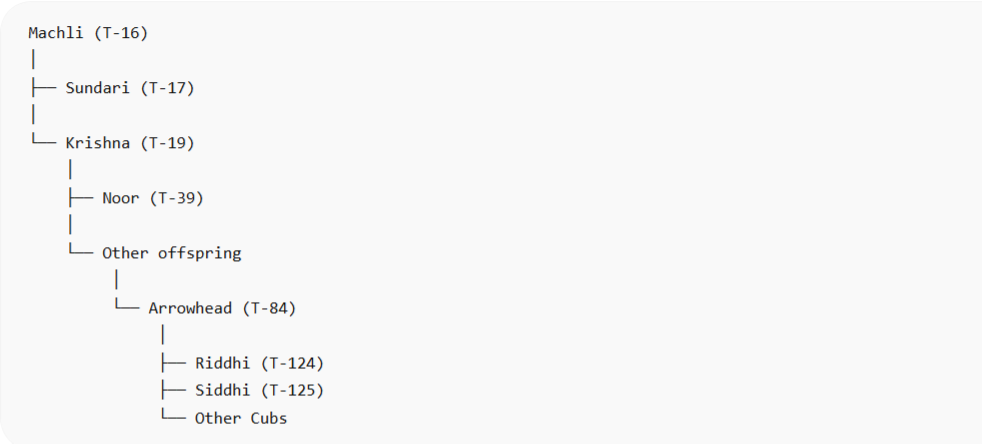
Machli’s bloodline includes several famous descendants such as Krishna (T-19), Noor (T-39), Arrowhead (T-84), Riddhi (T-124), and Siddhi (T-125). This lineage is considered one of the most successful tiger dynasties in Ranthambore.
4. Who was Krishna (T-19)?
Krishna (T-19) was one of Machli’s most famous daughters. She played a crucial role in continuing Machli’s genetic legacy and successfully raised multiple cubs.
5. Who is Noor (T-39)?
Noor (T-39) was a daughter of Krishna and one of Ranthambore’s most successful breeding tigresses. She helped expand the Machli bloodline across the park.
6. Who is Arrowhead (T-84)?
Arrowhead (T-84) is a famous descendant of Machli known for the arrow-shaped marking on her forehead. She became one of Ranthambore’s most photographed tigresses.
7. Are Riddhi and Siddhi related to Machli?
Yes. Riddhi (T-124) and Siddhi (T-125) are direct descendants of Machli through the Krishna–Noor–Arrowhead lineage.
8. Why is Machli’s bloodline important?
Machli’s bloodline has significantly contributed to the growth of Ranthambore’s tiger population and represents one of India’s greatest wildlife conservation success stories.
9. When did Machli die?
Machli died on 18 August 2016 at approximately 19 years of age, making her one of the longest-living wild tigresses recorded in India.
10. Can visitors still see Machli’s descendants in Ranthambore?
Yes. Visitors to Ranthambore National Park can still spot descendants of Machli, including famous tigresses such as Riddhi and Siddhi, depending on their movements and territories.