Chambal River Safari Near Ranthambore: Meet India's Rarest Crocodile, the Gharial
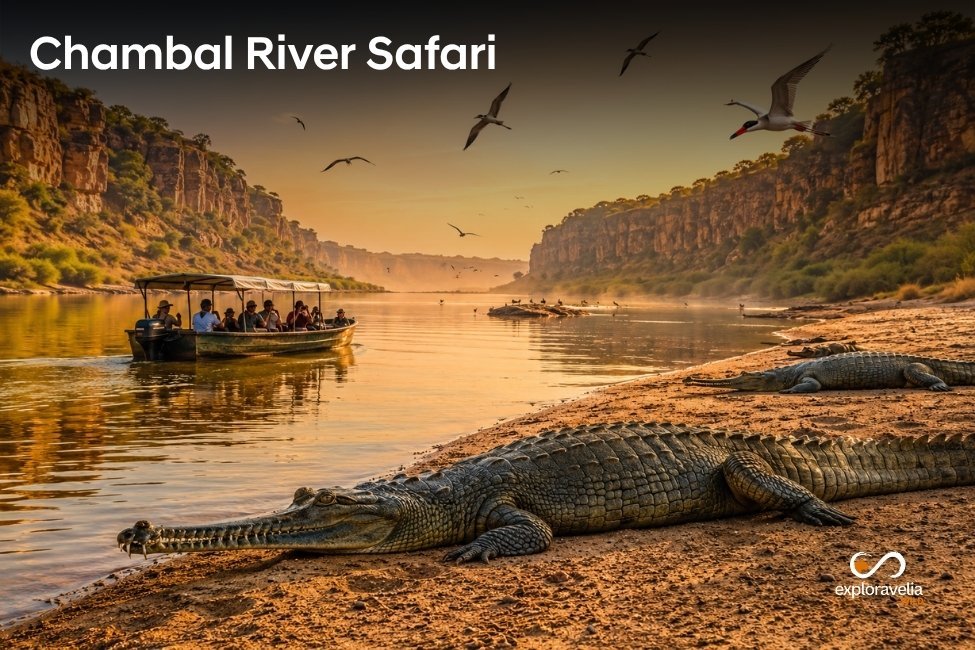
Most people who travel to Ranthambore come for one animal: the tiger. But less than a two-hour drive from the national park lies a completely different wildlife experience — one that most tourists never hear about. The National Chambal Sanctuary is home to the gharial, one of the most endangered and unusual-looking crocodilians on the planet, along with river dolphins, marsh crocodiles, and hundreds of migratory birds.
If you’re already planning a Ranthambore safari trip, adding a Chambal river safari is one of the easiest ways to turn a two-day tiger trip into a fuller, more memorable wildlife holiday.
What Makes the Gharial So Special?
The gharial (Gavialis gangeticus) is a crocodile species found almost nowhere else in the world. A few things set it apart from every other crocodile you’ve seen:
- The snout: Long, thin, and needle-like — built for catching fish, not for the powerful bite-and-drag hunting style of crocodiles or alligators.
- The “ghara”: Adult males develop a bulbous growth at the tip of their snout, which resembles a clay pot (called a “ghara” in Hindi) — this is actually where the gharial gets its name.
- Conservation status: Gharials are listed as Critically Endangered. Wild populations crashed by over 95% in the last century due to habitat loss, sand mining, and fishing net entanglement. The Chambal River holds the largest surviving wild population left anywhere.
Seeing a gharial in the wild isn’t just a novelty sighting — it’s one of the last chances to witness a species that could disappear from the wild within our lifetime.
Why the Chambal River, and Why Near Ranthambore?
The National Chambal Sanctuary stretches across Rajasthan, Madhya Pradesh, and Uttar Pradesh, protecting one of the last free-flowing, undammed stretches of river in India. Because the Chambal has largely escaped industrial pollution and heavy boat traffic, it remains one of the cleanest river ecosystems in the country — which is exactly why gharials, river dolphins, and turtles still survive here.
For Ranthambore visitors, the appeal is simple: you get two very different ecosystems — dry deciduous tiger forest and a clean, slow-moving river system — within a short drive of each other. Most travelers base themselves in Sawai Madhopur and do the Chambal safari as a half-day or full-day add-on.
What You'll See on a Chambal River Safari
The National Chambal Sanctuary stretches across Rajasthan, Madhya Pradesh, and Uttar Pradesh, protecting one of the last free-flowing, undammed stretches of river in India. Because the Chambal has largely escaped industrial pollution and heavy boat traffic, it remains one of the cleanest river ecosystems in the country — which is exactly why gharials, river dolphins, and turtles still survive here.
For Ranthambore visitors, the appeal is simple: you get two very different ecosystems — dry deciduous tiger forest and a clean, slow-moving river system — within a short drive of each other. Most travelers base themselves in Sawai Madhopur and do the Chambal safari as a half-day or full-day add-on.
What You'll See on a Chambal River Safari
A typical safari is done by boat, gliding quietly along the river rather than driving through forest. Sightings commonly include:
- Gharials basking on sandbanks, often in groups
- Mugger (marsh) crocodiles, the more commonly seen crocodile species in India
- Gangetic river dolphins — India’s national aquatic animal, spotted surfacing briefly for air
- Smooth-coated otters
- Skimmers, terns, black-necked storks, brown hawk-owls, and — in winter — large flocks of migratory birds along the sandbanks
Because the safari is on water, sightings feel less rushed than a jeep safari — the boat moves slowly, and animals along the banks are used to boat traffic at a distance.
Best Time to Visit
- November to March is the ideal window — cool weather, low water levels that expose sandbanks (where gharials bask), and peak season for migratory birds.
- Early morning safaris (around sunrise) offer the calmest water and the best light for photography.
- Summer months bring intense heat and higher water levels, which push animals away from the exposed banks.
How to Combine It With a Ranthambore Trip
The most common route travelers take:
- Day 1–2: Tiger safaris in Ranthambore National Park (based in Sawai Madhopur)
- Day 3: Early morning drive to the Chambal safari point (Dholpur or Rameshwar Ghat, depending on your operator), followed by the boat safari, then return to Sawai Madhopur or continue toward Agra/Bharatpur
This works especially well if you’re also headed toward Agra or Bharatpur (Keoladeo Bird Sanctuary) afterward, since Chambal sits conveniently along that route.
Practical Tips
- Book through a registered operator — access to the sanctuary is regulated, and boats/permits need to be arranged in advance.
- Carry binoculars — many sightings, especially birds and dolphins, are at a distance.
- Dress in neutral colors and avoid loud noise on the boat; gharials are shy and slip into the water at the slightest disturbance.
- Start early — temperatures rise quickly, and animals are most active and visible in the cooler morning hours.
A Rare Sighting Worth the Detour
Tigers get the headlines, but the Chambal’s gharials are arguably the rarer, more fragile species — and one most visitors to Rajasthan never get to see. For anyone already making the trip to Ranthambore, the extra day to the Chambal is a small addition with an outsized payoff: a quiet river, a critically endangered crocodile found nowhere else on Earth, and a side of Rajasthan’s wildlife that stays completely off the usual tourist trail.