Ranthambore Safari Zones Explained: Which Zone Has the Most Tiger Sightings?
Ranthambore National Park is one of India’s most famous tiger reserves and attracts thousands of wildlife enthusiasts every year. Located in Rajasthan, the park is celebrated for its healthy Bengal tiger population, ancient ruins, picturesque lakes, and dramatic landscapes.
One of the most common questions visitors ask before booking a safari is:
"Which Ranthambore safari zone has the highest chance of spotting a tiger?"
The answer isn’t as straightforward as many people expect. Tiger sightings depend on several factors, including the resident tiger’s territory, season, weather, safari timing, and even a bit of luck.
In this detailed guide, we’ll explain all Ranthambore safari zones, their unique features, and which zones generally provide the best opportunities for unforgettable tiger sightings.
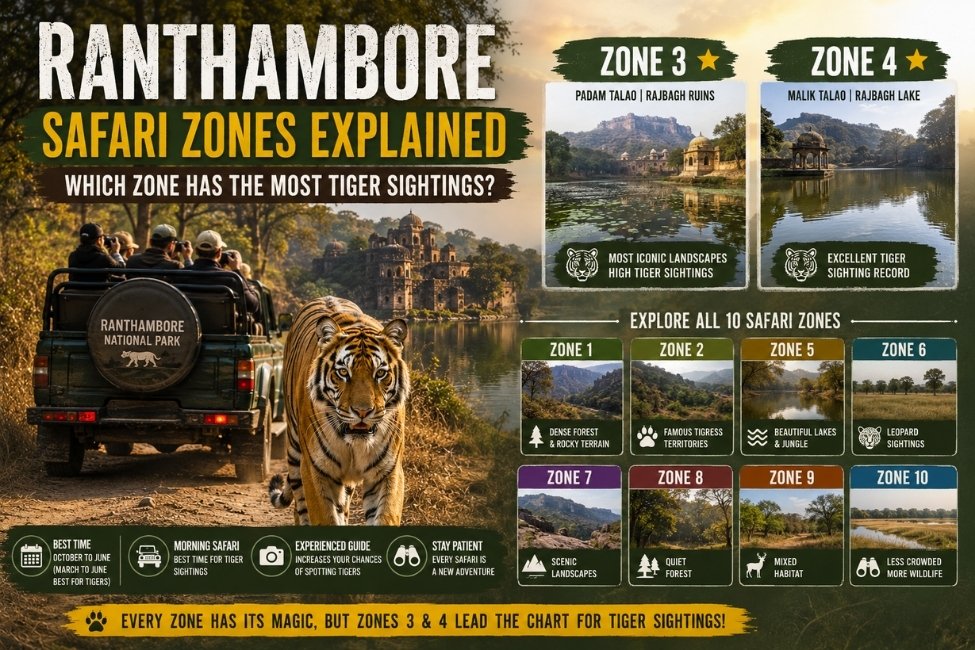
Understanding Ranthambore Safari Zones
Ranthambore National Park is divided into 10 safari zones, numbered from Zone 1 to Zone 10.
- Zones 1–5 are the original core zones.
- Zones 6–10 were later opened to manage visitor demand and support wildlife conservation.
Each zone has different landscapes, wildlife densities, and tiger territories.
Ranthambore Safari Zone Map Overview
| Zone | Best Known For | Tiger Sighting Chance |
|---|---|---|
| Zone 1 | Dense forest & rocky terrain | ★★★★☆ |
| Zone 2 | Famous tigress territories | ★★★★★ |
| Zone 3 | Padam Talao & iconic landscapes | ★★★★★ |
| Zone 4 | Lakes & ancient ruins | ★★★★★ |
| Zone 5 | Beautiful lakes & dense jungle | ★★★★☆ |
| Zone 6 | Leopard sightings | ★★★☆☆ |
| Zone 7 | Scenic landscapes | ★★★☆☆ |
| Zone 8 | Quiet forest | ★★★☆☆ |
| Zone 9 | Mixed habitat | ★★★☆☆ |
| Zone 10 | Less crowded | ★★★☆☆ |
Ranthambore Safari Zone Map Overview
| Zone | Best Known For | Tiger Sighting Chance |
|---|---|---|
| Zone 1 | Dense forest & rocky terrain | ★★★★☆ |
| Zone 2 | Famous tigress territories | ★★★★★ |
| Zone 3 | Padam Talao & iconic landscapes | ★★★★★ |
| Zone 4 | Lakes & ancient ruins | ★★★★★ |
| Zone 5 | Beautiful lakes & dense jungle | ★★★★☆ |
| Zone 6 | Leopard sightings | ★★★☆☆ |
| Zone 7 | Scenic landscapes | ★★★☆☆ |
| Zone 8 | Quiet forest | ★★★☆☆ |
| Zone 9 | Mixed habitat | ★★★☆☆ |
| Zone 10 | Less crowded | ★★★☆☆ |
Zone 1
Zone 1 features rugged hills, dry deciduous forests, and rocky valleys.
Highlights
- Dense vegetation
- Good tiger movement
- Sloth bears
- Leopards
- Sambars
Tiger sightings are frequent when resident tigers are active in the area.
Zone 2
Zone 2 has become one of the most reliable safari zones in recent years.
Visitors often report sightings near waterholes and forest tracks.
Wildlife includes:
- Bengal Tigers
- Leopards
- Nilgai
- Wild Boars
- Crocodiles
Morning safaris usually provide excellent opportunities.
Zone 3 – The Most Famous Zone
If you’ve seen iconic Ranthambore tiger photographs, many were likely taken in Zone 3.
Major Attractions
- Padam Talao
- Rajbagh Ruins
- Jogi Mahal View
- Beautiful lakes
- Historic fort backdrop
Resident tigers frequently patrol around the lakes, making this one of the most photographed areas in India.
Tiger sighting probability:
⭐⭐⭐⭐⭐
Zone 4
Zone 4 combines dense forests with scenic lakes and historic ruins.
Popular attractions include:
- Malik Talao
- Rajbagh Lake
- Ancient temples
- Rocky cliffs
Many experienced guides consider Zone 4 one of the top safari zones for consistent tiger sightings.
Zone 5
Zone 5 is known for
- Beautiful landscapes
- Water bodies
- Birdlife
- Tigers
- Leopards
Although slightly quieter than Zones 2–4, tiger encounters remain common.
Zones 6 to 10
These newer safari zones have grown in popularity over the years.
Wildlife found here includes:
- Leopards
- Striped Hyenas
- Sloth Bears
- Jackals
- Crocodiles
- Numerous bird species
- Occasionally Bengal Tigers
While tiger density is generally lower than in the core zones, these areas offer peaceful safaris with fewer vehicles and excellent opportunities to observe other wildlife.
Which Zone Has the Most Tiger Sightings?
There is no officially designated “best” zone because tiger territories change over time. However, based on recent safari trends and frequent sightings, the following zones are often considered among the strongest for tiger encounters:
| Rank | Zone |
|---|---|
| ⭐ 1 | Zone 3 |
| ⭐ 2 | Zone 4 |
| ⭐ 3 | Zone 2 |
| ⭐ 4 | Zone 1 |
| ⭐ 5 | Zone 5 |
Keep in mind that tiger movement is dynamic. A tiger seen regularly in one zone may shift its range, and sightings can vary with season, prey availability, and park management.
Factors That Affect Tiger Sightings
Even in the best zones, sightings are never guaranteed. Your chances improve based on:
- Experienced safari guide
- Skilled driver
- Early morning safari
- Summer season (March–June), when animals gather near water
- Animal alarm calls from deer and langurs
- Patience and quiet observation
Best Time to Visit Ranthambore
October to February
- Pleasant weather
- Green landscapes
- Excellent photography
- Moderate tiger sightings
March to June
- Hot temperatures
- Highest tiger sighting probability
- Animals concentrate around lakes and waterholes
Other Wildlife You Can Spot
Besides tigers, Ranthambore is home to:
- Leopards
- Sloth Bears
- Striped Hyenas
- Jackals
- Marsh Crocodiles
- Indian Fox
- Sambar Deer
- Chital
- Nilgai
- Wild Boars
- Langurs
- More than 300 bird species
Safari Booking Tips
- Book your safari several weeks in advance, especially during peak season.
- Choose a morning safari if possible for cooler temperatures and active wildlife.
- Wear earth-toned clothing to blend into the environment.
- Carry binoculars, a camera with a zoom lens, sunscreen, and drinking water.
- Follow your guide’s instructions and avoid making loud noises.
Conclusion
Every Ranthambore safari offers a unique wildlife experience. While Zones 3, 4, and 2 have earned a reputation for frequent tiger sightings, no zone can guarantee an encounter. The movement of wild tigers is unpredictable, which is part of what makes every safari exciting.
Whether you explore the historic lakes of Zone 3, the scenic forests of Zone 4, or the quieter landscapes of the newer zones, Ranthambore promises unforgettable moments with India’s incredible wildlife. Plan your safari with realistic expectations, enjoy the diversity of the park, and remember that every drive through the forest is an adventure.