Do Tigers Actually Attack Humans? The Truth About Man-Eaters
Tigers are among the most powerful and majestic predators on Earth. Their strength, stealth, and hunting abilities have inspired awe for centuries. Yet one question continues to spark fear and curiosity:
Do tigers actually attack humans?
The simple answer is yes—but it is extremely rare. Contrary to popular belief, humans are not the natural prey of tigers. Most wild tigers avoid people whenever possible. Only under specific circumstances do some tigers attack humans, and an even smaller number become what are known as man-eaters.
In this article, we’ll separate myths from facts and explain why tiger attacks happen.
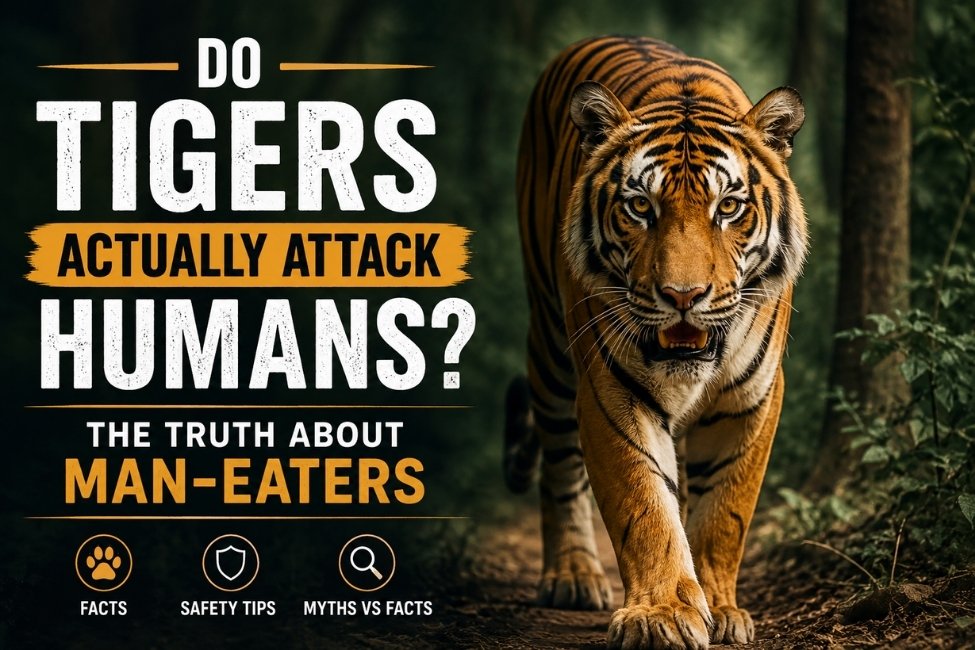
Are Humans Natural Prey for Tigers?
No.
Tigers naturally hunt animals such as:
- Deer
- Wild boar
- Gaur
- Sambar
- Nilgai
- Wild buffalo
These animals provide enough food for a healthy tiger. Humans are not part of a tiger’s natural diet.
Most tigers detect humans long before we notice them and quietly move away.
Why Do Tigers Attack Humans?
There are several reasons why a tiger may attack a person.
1. Injury or Old Age
An injured or elderly tiger may struggle to hunt fast-moving prey like deer. In desperate situations, humans become easier targets.
Many historical man-eaters had broken teeth, damaged paws, or serious injuries.
2. Habitat Loss
As forests shrink due to human activities, tigers lose their hunting grounds.
This forces them to move closer to villages, farms, and livestock, increasing encounters with people.
3. Protecting Cubs
A tigress with cubs is highly protective.
If she feels threatened, she may charge or attack to defend her young—even if the person had no intention of harming them.
4. Surprise Encounters
Sometimes people accidentally come very close to a resting tiger.
When a tiger feels trapped or startled, it may attack in self-defense.
5. Lack of Wild Prey
In areas where natural prey has declined due to poaching or habitat degradation, tigers may turn to livestock. In rare cases, repeated contact with humans can increase the risk of attacks.
What Is a Man-Eater?
A man-eater is a tiger that repeatedly hunts humans as prey.
This is not normal behavior.
Wildlife experts have found that most man-eaters become dangerous because of:
- Serious injuries
- Old age
- Broken canine teeth
- Loss of natural prey
- Habitat destruction
Healthy tigers generally prefer wild animals over humans.
Famous Man-Eater Tigers in History
Several tigers became famous because of repeated attacks.
Champawat Tigress
One of the most well-known man-eaters in history, the Champawat Tigress was responsible for hundreds of human deaths in Nepal and India before being hunted by Jim Corbett.
Experts later discovered she had severely damaged teeth, making it difficult to hunt natural prey.
Sundarbans Tigers
The Sundarbans has recorded more tiger attacks than most other tiger habitats.
Reasons include:
- Dense mangrove forests
- Frequent human entry for fishing and honey collection
- Salty water affecting prey distribution
- Extremely close human-tiger interactions
Even here, attacks are not everyday occurrences.
Are Tiger Attacks Common Today?
No.
Despite thousands of people living near tiger reserves, attacks remain relatively uncommon.
Modern conservation efforts include:
- Better monitoring
- Camera traps
- Radio collars
- Early warning systems
- Rapid response teams
- Community awareness programs
These measures have significantly reduced conflicts in many areas.
What Should You Do If You Encounter a Tiger?
If you unexpectedly see a tiger in the wild:
- Stay calm.
- Never run.
- Back away slowly.
- Avoid direct eye contact while keeping the tiger in view.
- Make yourself appear larger if necessary.
- Follow your guide’s instructions.
- Never approach for photographs.
Most tigers will leave the area if given enough space.
Myths vs Facts
| Myth | Fact |
|---|---|
| Tigers hunt humans for food. | Humans are not their natural prey. |
| Every tiger is a man-eater. | Only a tiny percentage become man-eaters. |
| Tigers attack whenever they see people. | Most avoid human contact. |
| All tiger attacks are predatory. | Many are defensive or accidental. |
| Tiger populations increase attacks. | Better conservation often reduces conflict. |
The Importance of Tiger Conservation
Protecting tiger habitats benefits both wildlife and people.
Conservation helps:
- Preserve forests
- Maintain healthy prey populations
- Reduce human-wildlife conflict
- Support local communities through eco-tourism
- Protect biodiversity
The more secure a tiger’s habitat, the less likely it is to come into conflict with humans.
Final Thoughts
Tigers are powerful predators, but they are not natural hunters of humans. Most tiger attacks happen because of injury, old age, habitat loss, surprise encounters, or the need to protect cubs—not because tigers prefer human prey.
Understanding the real reasons behind these rare incidents helps replace fear with knowledge. By protecting forests, conserving prey species, and promoting responsible tourism, we can ensure that humans and tigers continue to coexist more safely.
Frequently Asked Questions (FAQs)
Do tigers normally hunt humans?
No. Humans are not a tiger’s natural prey, and most tigers avoid people.
Why do some tigers become man-eaters?
Usually because of injury, old age, damaged teeth, lack of natural prey, or habitat loss.
Which tiger habitat records the most attacks?
The Sundarbans has historically reported a higher number of attacks due to its unique environment and frequent human activity.
Is every tiger dangerous?
All wild tigers are powerful predators and should be respected, but the vast majority do not seek out humans.
Can tiger attacks be prevented?
Many attacks can be reduced through habitat conservation, community awareness, maintaining healthy prey populations, and following safety guidelines in tiger habitats.