Kankati : The Young Tigress Behind Recent Tragedies in Ranthambore National Park
In the dense wilderness of Ranthambore National Park, every tiger has a story. Among them, one name has recently dominated headlines and stirred discussions among wildlife enthusiasts and authorities alike — Kankati. A young, sub-adult tigress barely two years old, Kankati has become the center of attention following two fatal incidents in Sawai Madhopur district, Rajasthan.
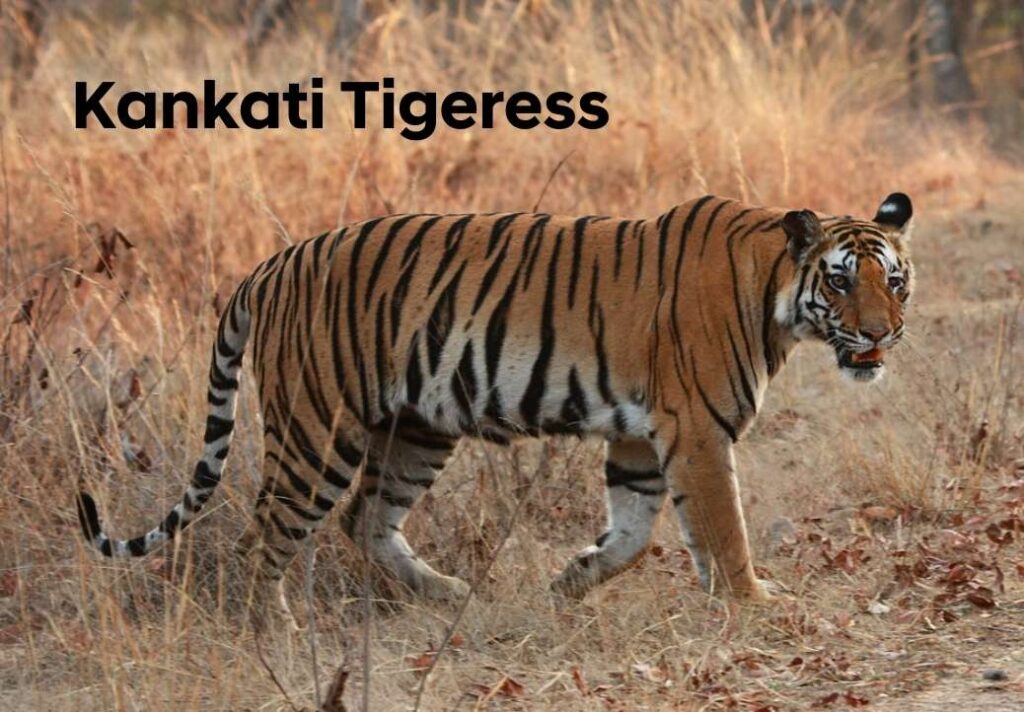
Who is Kankati
1. Granddaughter of Machli
Kankati’s upbringing in the wild heart of Ranthambore has not been without complications. With a strong maternal lineage, she is a granddaughter of the legendary tigress Machli, known as the “Queen of Ranthambore.” However, her path has turned turbulent in recent months.
2. Named for Her Missing Eye
3. Ruler of the Lakes
4. Famous for Her Boldness
Kankati was known for her aggressive and bold nature. Tourists and wildlife photographers often witnessed her chasing crocodiles, stalking prey in broad daylight, and fearlessly defending her territory.
5. A Camera-Friendly Tigress
6. Mother of Future Generations
7. Mysterious Disappearance
In 2013, Kankati suddenly disappeared, and despite efforts by forest officials, she was never found. It’s widely believed that she may have died in a territorial fight or due to old injuries — but her exact fate remains unknown, adding to her legend.
The tigress Kankati, known as T-19 in Ranthambore, is a story of inheritance, motherhood, and territorial expansion. As the heir to the territory of the famous tigress Machali, T-19, who was also known as T-19, inherited a vast expanse of land when Machali’s offspring T-18 was relocated to Sariska Reserve. T-19 became the proud owner of the largest territory in the park, often seen training her cubs and enjoying walks in the sunlit woods.
Here's a more detailed look at her story:
Inheritance and Territory:
Motherhood and Training:
Territorial Expansion:
Popular Sighting:
The Tragic Incidents :
1. April 16, 2025 – Attack Near Trinetra Ganesh Temple
2. May 11, 2025 – Forest Ranger Killed
Capture and Confinement
‘Kankati’, the sub-adult tigress who killed a 7-year-old boy and a forest ranger in under one month in Ranthambore Tiger Reserve was tranquillised Wednesday and moved into an enclosure in park’s Bheed region. The forest department captured her after she ventured into the farmlands of Kultalpura Maliyan village, a human settlement on the periphery of Ranthambore National Park.
The operation to tranquillise Kankati began around 8am when she was spotted near Hotel Machan in the village, with about 1,500 inhabitants. “Forest officials deemed the situation potentially dangerous, leading to a quick decision to tranquillise the tigress around 9:30am,” a source said.
Kankati has been linked to the death of forest ranger, Devendra Choudhary, killed on May 11 while on duty near the Jogi Mahal area within the reserve, and a seven-year-old boy, Kartik Suman, who was mauled to death by the tigress at the Ranthambore Fort on April 16. In response to these incidents, the forest department formed a five-member committee This committee comprising representatives from the National Tiger Conservation Authority (NTCA), the chief wildlife warden, a local NGO, a panchayat representative and the field director, to investigate the circumstances leading to the attacks.
“The committee will deliberate on whether Kankati should remain in her current enclosure or be relocated to a biological park,” a source added.
Concerns have been raised about keeping the young tigress inside the enclosure for an extended period, as it lies within a critical natural corridor connecting the Kailadevi Wildlife Sanctuary and the Ranthambore Tiger Reserve.
Previous experiences, as was the case with T-104 in Sept 2019, an aggressive male tiger deemed ‘dangerous to human life’, have shown that conflicts can arise when tigers are housed in close quarters, leading to injuries and heightened aggression. “Wild tigers clashed with the caged T-104, leading to aggression from both sides. T-104 sustained injuries due to the cage’s iron bars,” a source said.
To avoid a repeat of such an instance, experts have advocated that Kankati be relocated to a biological park in Jaipur or Udaipur, emphasising the impracticality of maintaining a tiger in an enclosure within the core reserve.
Why Did This Happen?
Wildlife experts and forest officials have been analyzing the potential causes behind Kankati’s unusual aggression:
- Territorial Stress: As a young tigress, Kankati was trying to establish her own territory. This likely brought her into conflict with other tigers, including her older half-sister Riddhi.
- Human Proximity: The area around the Trinetra Ganesh Temple sees high human traffic due to religious pilgrimage. Regular exposure may have reduced her instinctive fear of humans.
- Maternal Influence: Her mother, Arrowhead, has reportedly been unwell and was being fed live bait. Experts speculate this might have distorted Kankati’s understanding of prey, making her more likely to view humans as targets.
Conclusion
The story of Kankati is a stark reminder of the fragile boundary between wild and human spaces. She is not a “man-eater” by nature — she is a young tigress grappling with survival instincts in a landscape increasingly shared with humans. Her actions, while tragic, reflect the growing conflict between wildlife and human presence in protected areas.
The situation also raises broader questions: Should religious and tourism activities be restricted in core wildlife zones? Are we doing enough to preserve the natural instincts of wild animals by avoiding overexposure?
As Ranthambore grapples with these realities, Kankati’s fate remains uncertain. What is clear, however, is that her story must inspire urgent action — not just for her, but for the many tigers who silently navigate the pressures of a shrinking wilderness.