The Timeless Beauty Of Ranthambore Fort
- Type Fortress
- Location Sawai Madhopur, Rajasthan, India
- Area 102 ha (0.39 sq mi)
- Built 5th Century CE UNESCO World Heritage Site
- Type Cultural
- Designated 2013 (37th session)
- Part of Hill Forts of Rajasthan
- ID 247rev-003
- Region Asia and the Pacific
- Buffer Zone 372 ha (1.44 sq mi )
Introduction
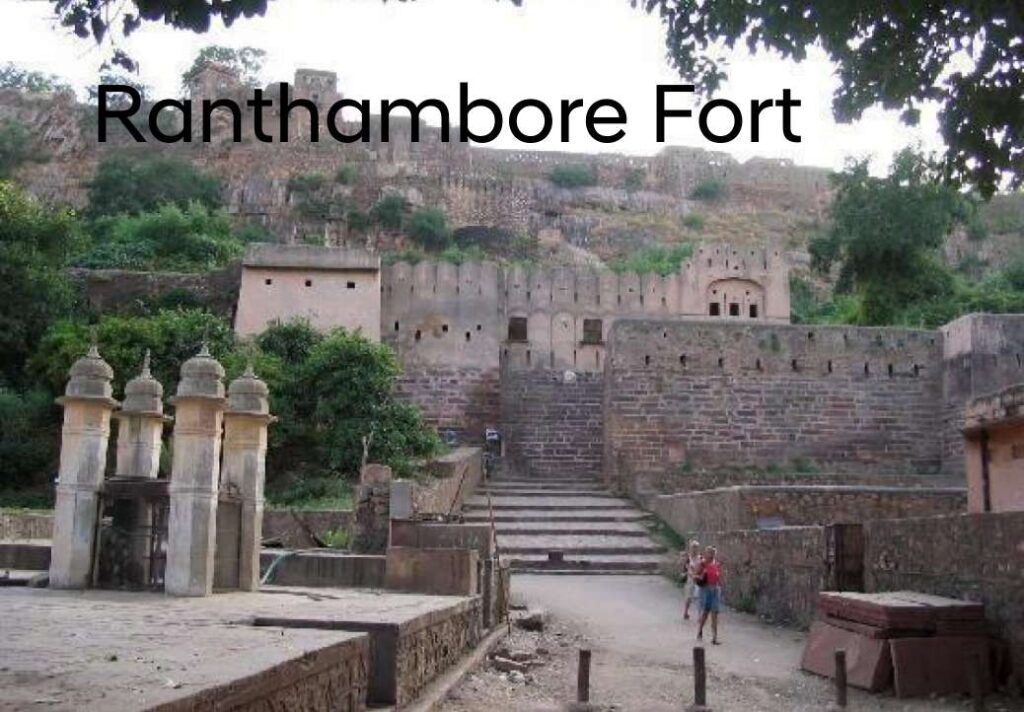
The Ranthambore Fort is located in the Ranthambore National Park, close to Sawai Madhopur, in the Indian state of Rajasthan. In the middle of vast, dry, barren areas of Rajasthan, the Ranthambore Fort is encircled by the Vindhyas and Aravallis. Its advantageous location made it perfect for holding the enemy at bay. Ranthambore Fort, located on the Delhi-Mumbai railway line, is a fort structure 13 kilometres from Sawai Madhopur Railway Station and 481 meters above sea level. On the Delhi-Mumbai railway line, 13 km from Sawai Madhopur Railway Station, between the Ran and Thamb hills. The names Rann and Thambor, two nearby hills, are the source of the name Ranthambore. There are natural moats built in all three hills of the fort, which strengthens the security of this fort and makes it invincible. It is a formidable fort having been a focal point of the historical developments of Rajasthan. Ranthambore fort, perched majestically within the Ranthambore National Park Rajasthan, India, is a testament to India’s rich history and architechtural brilliance. With its awe-inspiring structure , dramatic location amidst lush forests, With inspiring stories of bravery, this fort never fails to captivate tourists and history buffs from all over the world.
A Strength of Strategic Significance
The provides a panoramic view of the surrounding Ranthambore National Park, making it easy to spot advancing armies and is now popular tourist attraction.
Control of Trade Routes : The fort was strategically located near major trade routes, allowing rulers to moniter and control the movement of good and people.
Water Management : The fort had an advancedsystem of reservoirs and wells, ensuring a continuous water supply during sieges.
The presence of Hindu and Jain temples, including the famous Ganesha Temple made it not only a military stronghold but also a cultural and religious center.
In modern times, the fort’s location within Ranthambore National Park adds ecological and tourism value. It is a key attraction for visitors about India’s wildlife and history
A UNESCO World Heritage Site
Reconizing its historical and cultural significance, Ranthambore Fort was declared a UNESCO World Heritage Site in 2013 as part of the Hill Forts of Rajasthan. This status ensures its preservation for future generations to marvel at and learn from.
In 2013, at the 37th session of the World Heritage Committee held in Phnom Penh, Cambodia, Ranthambore Fort, along with 5 other fort of Rajasthan, was declared a UNESCO World Heritage Site under the group Hill Fort of Rajasthan.
A Look Back at History’s Ancient Beginnings
Originally a modest hill fort, Ranthambore Fort was constructed in 944 AD by the Chauhan Rajput kings. It developed into this powerful hold over the decades.
Nonetheless, some people think that Maharaja Jayant, the Yadava king, constructed the Ranthambore fort around 1110 AD. It was ruled by the Yadava ruler until the 12th century, when Prithviraj Chauhan drove them out. The Delhi Sultans occupied the fort. Later, the Mewar and Mughal dynasties took possession of it. Every monarch improved their legacy by leaving their lasting impression.
It was formerly known as Ranastambhapura (Sanskrit: Rana-Sthamba-Pura, or “City of the Battle Post”) during the Chauhan Rajputs. In the 12th century, during Prithviraja 1 of the Chahamana (Chauhan) dynasty, it was linked to Jainism. century. This location was added to the list of sacred Jain tirthas by Siddhasenasuri, who flourished in the 12th century. A shrine dedicated to Mallinatha was constructed in the fort during the Mughal era.
After Prithvi Raj Chauhan, the final Hindu monarch of Delhi, moved to Ranthambore and established it as their capital, Ranthambore came into being.
Muhammad of Ghor, a Muslim Ghurid ruler, took control of the fort following the fall of Prithvi Raj 3 in 1192 CE.
Ranthambore was taken by the Delhi Sultan Iltutmish in 1226, but it was retaken by the Chauhans in 1236 upon his death. In 1248 and 1253, the future Sultan Balban commanded Sultan Nasiruddin Mahmud’s army in an unsuccessful siege on the fortress. but taken in 1259 from Jaitrasingh Chauhan. In 1283, Jaitrasingh was succeeded by Shakti Dev, who expanded the empire and retook Ranthambore. In 1290-91, Sultan Jalal ud din Firuz Khilji temporarily assaulted the fort but was unable to take it. However, Ranthambore’s true popularity began in 1283 AD, when Raja Hammeer Dev, the most well-known ruler of the time, was crowned. Hammeer Dev refused to hand over Muhammad Shah, a rebellious commander of Sultan Ala uddin Khilji, to the Sultan in 1299. In 1301, the fort was assaulted and overrun by the Sultan.
Under Mewar, several Mewar rulers took control of the castle. Rana Sanga (1508-1528), Rana Kumbha (1433-1468), and Rana Hameer Singh (1326-1364) all had direct control over Ranthambore.
Under Hadas
The Hada Rajputs of Bundi inherited the citadel during the reign of Rana Udai Singh 1 (1468–1473). From 1532 to 1535, the castle was briefly taken by Sultan Bahadur Shah of Gujarat. The castle was taken from Hadas by the Mughal Emperor Akbar at the Siege of Ranthambore (1568).
Under Jaipur
In the 17th century, the castle was inherited by the Kachwaha Maharajas of Jaipur, and it remained a part of Jaipur state till the independence of India. The Maharajas of Jaipur turned the territory around the citadel into a hunting park. In 1949, Jaipur State joined India, and in 1950, it became a part of Rajasthan.
Temples Three Hindu temples inside Ranthambore Fort are devoted to Ganesha (Trinetra Ganesha), Shiva, and Ramlalji. They were built in the 12th and 13th centuries from red Karauli stone. The Ganesha Temple is particularly famous and attracts thousand of visitors every Wednesday . There is also a Jain temple of Lord Sumatinath (5th Jain Tirthankar ) and Lord Sambhavanath. Architectural Grandeur and Marvels Spread over a sprawling 7 kilometers, Ranthambore fort is a stunnig blend of Rajput and Mughal architectural styles. Fort features a collection of intricately carved temples, palaces and gates, accessible through seven distinct entrances. Among these, Navlakha Pol, positioned to the east, is notable for its copper plate inscribed with historical details. Another eastern gate, Suraj Pol, is the smallest of the fort’s entrances. On the southern side, Ganesh Pol and Sat Pol provide access, while Andheri Pol, Hathi Pol and Delhi Pol serve the northern, southeastern, and northwest sides, in that order. The fort’s cenotaphs, strong walls, bastions, and elaborate carvings all showcase the skill of the time. The fort contains historic mosques, palaces, reservoirs, and temples that all tell tales of a bygone period. The Rajput monarchs’ secularism is demonstrated by the existence of a mosque and temple inside the fort’s grounds.
There are several buildings within the fort that demonstrate its religious and historical significance, such as:
The Ganesha Temple: Located inside the fort, this temple is especially well-known and attracts devotees from all over. It is regarded as one of India’s oldest Ganesha temples, where both residents and visitors offer prayers in hopes of receiving blessings for joy and wealth. The fort is also related to historical legend of the royal women performing ‘JAUHAR’ (self-immolation) when the muslim invader Alauddin Khilji laid siege on this fort in 1303.
Intricate sculptures adorn Jain temples.
The lives of its former monarchs are echoed by palaces and water tanks.
The fort’s architectural genius is on display in a number of important buildings, including the Jodhabai Mahal, Badal Mahal, 32 Pillared Chhatri, Hammer Court, Dulha Mahal, and Phansi Ghar.
The fort is an architectural wonder with a number of attractions on its grounds, including Sametonki Haveli, Mahadeo Chhatri, and Toran Dwar.
The layout of the fort, which combines standing buildings and ruins, provides an intriguing historical tour.
Myths and Cultural Significance
In addition to being a historical artefact, Ranthambore Fort is also a part of local legend. The Ganesha Temple, where letters are sent to Lord Ganesh as part of devotional rituals, is the subject of one of the most persistent stories. Every year, on the occasion of Bhadrapad Sudi Chaturthi, it also holds a fair. The temple is a spiritual icon, drawing thousands of pilgrims each year. Legends of Bravery and Tradition Ranthambore Fort was built in 944 AD and has seen numerous sieges, conflicts, and innumerable stories of valour and defiance. During the rule of Maharaja Hameer Dev Chauhan, who vehemently opposed Alauddin Khilji’s attacks, the fort was crucial in protecting the area from invaders. The battle of Rao Hameer against Alauddin Khilji, the ruler of Delhi, in 1301 is arguably the most well-known of these. Visitors are still motivated by these tales of bravery and selflessness, which has made the fort a representation of tenacity and might.
Examining the Fort
A trip back in time is what visiting Ranthambore Fort entails. You can practically sense the echoes of history as you enter via its enormous gates and visit its historic buildings. The fort’s expansive views are a photographer’s paradise, particularly at sunrise and sunset when the surrounding area is illuminated by golden light.
Advice for Guests
Ranthambore Fort: For excellent animal observations and good weather, October through March is the best time to visit.
Entry: It takes a short walk to reach the fort. Keep water with you and wear comfortable shoes. What to Bring: Binoculars to see wildlife and a camera to record breathtaking views. Nearby Attractions: To round off your trip, don’t miss a safari at Ranthambore National Park.
conclusion
More than just a historical landmark, Ranthambore Fort serves as a link between the past and present, where tigers’ roars and the murmurs of old conflicts coexist. It is a must-visit location for tourists because of its untamed beauty, extensive history, and tranquil atmosphere. It is a live example of India’s rich cultural legacy and the resilient nature of its people. Perched atop a hill, Ranthambore Fort is a magnificent building that provides access to a stunning sunset location. Although the fort is now in ruins, it nevertheless contains centuries’ worth of history and battle cries within its walls, providing an insight into Rajasthan’s illustrious past while also serving as a treasure trove of untold legends.
Ranthambore Fort offers something for everyone, regardless of your interests—history buffs, nature lovers, or those looking for a spiritual getaway. Make travel plans to witness this amazing fusion of nature and culture!